

Newsletters
Our Regional Improvement Plan can be found here
If you would like to apply to be a SESLIP consultant, please follow this link to Kent Business Portal – KentBusinessPortal and after registering on the portal, search for Ref – SC240046 – SESLIP – DPS
Updates
Fostering in England: year to end March 2025
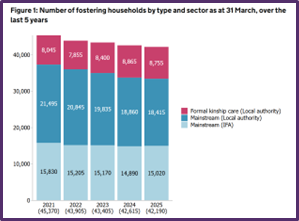
On 26 November DfE published annual statistics for Fostering 2024-2025
Headlines
- the number of mainstream fostering households has continued to decline over the past 4 years, but at a slower rate compared to last year
- there has been an increase in the number of newly approved mainstream households entering the sector this year, following a longer-term downward trend which plateaued between 2023 and 2024
- the proportion of formal kinship care arrangement (family and friends) households has remained consistent with last year. However, there has been a slight decline in the proportion of newly approved formal kinship care arrangement households still active at 31 March
- there continues to be an increase in the proportion of IFA mainstream households with the number of IFA households and places seeing a slight increase from the previous year
- the number of short break places has increased by 41% since 2021
Tipping point: tackling the challenges in safeguarding children educated at home
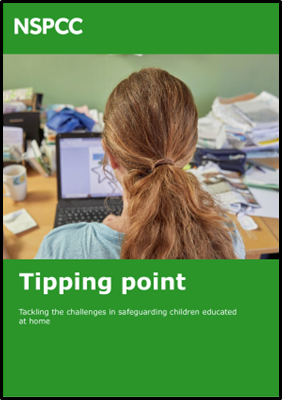
On 24 November NSPCC published Tipping point: tackling the challenges in safeguarding children educated at home
The research includes:
- a review of UK literature on safeguarding in home education published since 2015, including learning from Serious Case Reviews (SCRs) and Child Safeguarding Practice Reviews (CSPRs) in England
- a Freedom of Information (FOI) request sent to all local authorities in England to understand the scale and nature of home education in each area
- 11 in-depth, semi-structured interviews with local authority home education teams in England
- qualitative and quantitative insights on home education gathered by Childline and the NSPCC Helpline between 2019 and 2025.
Children looked after in England including adoptions: year to end March 2025
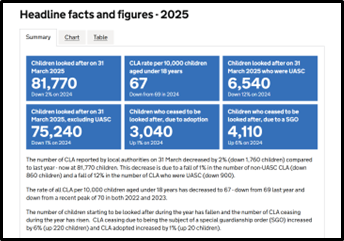
On 26 November DfE published annual statistics for Children looked after in England including adoptions 2024-2025
Headlines
The number of CLA reported by local authorities on 31 March decreased by 2% (down 1,760 children) compared to last year – now at 81,770 children. This decrease is due to a fall of 1% in the number of non-UASC CLA (down 860 children) and a fall of 12% in the number of CLA who were UASC (down 900).
The rate of all CLA per 10,000 children aged under 18 years has decreased to 67 – down from 69 last year and down from a recent peak of 70 in both 2022 and 2023.
New practice guide: parenting through adversity (11-18s)
On 4 December Foundations published a new practice guide: Parenting through adversity (11-18s)
Headlines
- This Practice Guide focuses on parenting support for families experiencing adversities who have at least one child or young person aged 11 to 18 years old.
- This Guide relates to all outcomes of the Children’s Social Care National Framework. The enablers of the National Framework (leadership, workforce, multi-agency working) have a role in supporting the delivery of this Guide’s key principles and recommendations.
- This summary online version complements a full version of the Practice Guide.
- This Guide should be considered alongside the Parenting through Adversity (0-10) Practice Guide.
Reminders From Previous Weeks
South East Sufficiency Statement 2026
On 20 November, Home+Future, the South East RCC, published the region’s Sufficiency Statement 2026: Building positive futures
The full report is here (pdf, 66 pages)
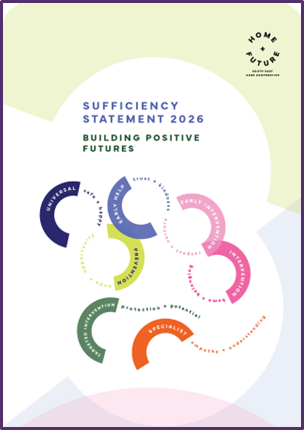
Building positive futures
Home + Future is proud to publish its first regional Sufficiency Statement.
This Statement marks the start of a shared regional approach to understanding what children need, where pressures are greatest, and how we can work together to ensure every child has the right home and the right support.
It provides a common baseline, a clearer picture of challenges, gaps and opportunities across the region, and lays the groundwork for coordinated action.
And this is just the start.
We will continue to build and refine this shared understanding with our partners, using these insights to shape a forward plan that supports local authorities and, above all, strengthens outcomes for the children and young people we serve.
Belonging and Excellence
On 24 November AEPA published Belonging and Excellence: The importance of local education partnerships.
The online flip-book is available here (20 pages)
It features two case studies from Schools Alliance for Excellence (Surrey). Milton Keynes EP are also members.
The importance of local education partnerships
School-led, not-for-profit collaborations are providing the “local glue” binding schools, families, and services together. This is according to Area-based Education Partnership Alliance’s (AEPA) case study research of local education partnerships of which there are 30 currently operating across England.
The report explores how the partnerships are benefiting schools by raising standards and building professional capital, developing local leadership pipelines, supporting wellbeing and inclusion, tackling economic and educational disadvantage, and strengthening belonging and identity within communities.
Recent NGA research also found similar benefits of school-to-school collaboration.
National Centre for Family Hubs
On 10 November, the National Centre for Family Hubs published a case study from the Isle of Wight
More from iowfamilycentres@barnardos.org.uk
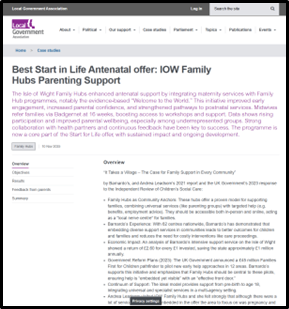
Best Start in Life Antenatal offer: IoW Family Hubs Parenting Support
The Isle of Wight Family Hubs enhanced antenatal support by integrating maternity services with Family Hub programmes, notably the evidence-based “Welcome to the World.” This initiative improved early engagement, increased parental confidence, and strengthened pathways to postnatal services. Midwives refer families via Badgernet at 16 weeks, boosting access to workshops and support. Data shows rising participation and improved parental wellbeing, especially among underrepresented groups. Strong collaboration with health partners and continuous feedback have been key to success. The programme is now a core part of the Start for Life offer, with sustained impact and ongoing development.
CCN report on SEND crisis
On 14 November CCN published SEND in England: how we got to crisis point and why we need reform of the system
The full report is here (pdf, 53 pages)
How we got to crisis point, and why we need reform of the system
Councils say the government ‘cannot keep ducking’ reforms to the special educational needs and disabilities (SEND) system as new research reveals a system on course for total collapse with local authorities facing ‘unimaginable’ deficits of £18bn by the end of this Parliament.
The report, from the County Councils Network (CCN), finds that despite councils investing £30bn more on SEND services over the last decade, educational outcomes have not improved whilst families feel increasingly negative about the system.
Last month, the government delayed publication of planned reforms to the SEND system. Warning that the research shows a system on ‘course for total collapse’, CCN argues that the government’s continuing inaction ‘only compounds the difficult experiences for families, letting down thousands of young people whilst pushing councils to the financial brink’.
Children on custodial remand
On 11 November the Children’s Commissioner published Children on custodial demand
“A production line of pointlessness”
Hundreds of children are being locked up while awaiting trial because of inadequate local authority provision, the Children’s Commissioner for England has warned.
Dame Rachel De Souza warned that children are being “treated as guilty until proven innocent” and called for the closure of all YOIs. She told the annual Longford Lecture that too many children who have not been convicted are being placed in custody as a “waiting room” while overstretched services struggle to provide suitable placements.
Latest analysis by the commissioner’s office finds that most of these children are unnecessarily exposed to the harms posed by being held on remand – in 2023/24, 62% of those remanded in England and Wales did not go on to receive a custodial sentence, while 17% had their cases dropped. Despite fewer children being remanded than a decade ago, the average length of time in custody has risen by 89% since 2013/14 – to 125 nights.
SESLIP QA Conference – NOW BOOKING
On Monday 8 December SESLIP is hosting a collaborative QA co-design event.

Headlines
On behalf of the SESLIP QA network, Kent Analytics has been research CSC QA processes and practices across the region.
This event will be an opportunity for QA leads and staff to participate in the co-design of new improved procedures based on the research findings.
SESLIP Targeted Support
The SESLIP Targeted Support scheme is now open to enquiries from children’s services authorities in the south east.
This project is funded by the DfE’s RIIA grant and is open to both CSC and SEND.
Details
The prospectus introduces our dedicated Targeted Support Core Team, which includes experienced, ex-local authority leaders, who have worked at director, assistant director and principal programme manager levels,
The core team’s practice is enhanced by collaboration with Subject Matter Experts (SMEs) from across the full range of children’s services.
A bespoke package will be agreed at scoping stage.
For more information, or to become involved as a subject matter expert, contact Claire@clairewoodcockconsulting.com
Regional Improvement Plan 2025-26
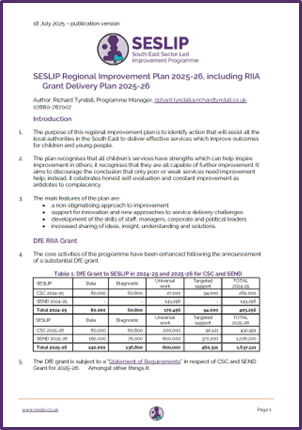
On 18 July 2025 SESLIP published our regional improvement plan for 2025-26
Headlines
The new regional improvement plan has 47 projects and a budget of just under £2m.
The plan incorporates our delivery plan for DfE’s RIIA grant of £1.6m to SESLIP for the current year
Tools & Templates
We have produced a Regional Improvement Plan (July 2025)
On 26 November DfE published annual statistics for Fostering 2024-2025
On 26 November DfE published annual statistics for Children looked after in England including adoptions 2024-2025
On 24 November NSPCC published Tipping point: tackling the challenges in safeguarding children educated at home
On 24 November AEPA published Belonging and Excellence: The importance of local education partnerships.
On 20 November, Home+Future, the South East RCC, published the region’s Sufficiency Statement 2026: Building positive futures
On 14 November CCN published SEND in England: how we got to crisis point and why we need reform of the system
On 11 November the Children’s Commissioner published Children on custodial demand
On 11 November Rees Centre published Success – whose definition counts? A co-designed framework by and for young people leaving care
On 10 November, the National Centre for Family Hubs published a case study from the Isle of Wight
On 5 November Centre for Young Lives published Best Start: A Fresh Start for
Children and Family Support
Part 2 Report
On 5 November DfE and DHSC launched an independent review of social work regulation
On 30 October Contact published a policy briefing How Continuing Care for Children fails those with the most complex health needs (England).
On 30 October DfE published the annual Children in need statistics for the year to 31 March 2025.
On 28 October DfE published Academic year 2024/25 Home to school transport: LA data collection
On 22 October MoJ published Presumption of parental involvement review: final report
On 20 October DfE published the Post-16 Education and Skills White Paper
On 20 October ONS published Suicides in children and young people across the academic year, England: September 2011 to August 2022
On 20 October The Children’s Commissioner published The Children’s Plan: Vision for Care
On 13 October The Domestic Abuse Commissioner published Everday Business
On 13 October Home+Future (the south east’s RCC) published Briefing 002 – cross regional placements
On 10 October The Youth Endowment Fund published Access to mental health support
On 6 October Ofsted published Children’s social care questionnaires 2025
On 3 October APSEND and CSTUK published Upstream – best practice examples from specialst, AP and mixed trust schools
On 3 October 2025 IFS published Support for children with disabilities and special educational needs as part of its Green Budget for 2025
On 2 October Kinship published its annual survey of Kinship carers “Handle with Care”
On 2 October 2025 EEF published an independent evaluation of the BITUP programme – a low cost programme to improve secondary school attendance.
On 26 September 2025 HMIPrisons published Children in custody 2024–25
An analysis of 12–18-year-olds’ perceptions of their experiences
in secure training centres and young offender institutions
On 25 September DfE published a research report, Family Routes: children who returned to care after leaving for adoption or to live with a special guardian